

Upper cross syndrome is caused by “weak” and “tight” muscles. This can be caused by bad posture. The “tight” muscles are the pectorals, Sternocleidomastoid (SCM), Upper Traps and Levator Scapulae. The “weak” muscles are the deep neck flexors, rhomboids, lower traps, and serratus anterior.
Upper cross syndrome can lead to numerous of symptoms including:
Upper Cross Syndrome is a chronic condition that can leave significant muscle imbalances in the body and lead to chronic back pain. If someone develops this muscular imbalance and is regularly active or an athlete, it can lessen their mobility, reduce overall performance and cause injuries. If not treated, the condition can cause damage to the spine from continual pressure on the front of the vertebrae, impinging the shoulder which can lead to damage to the rotator cuff, low back pain and other chronic issues.
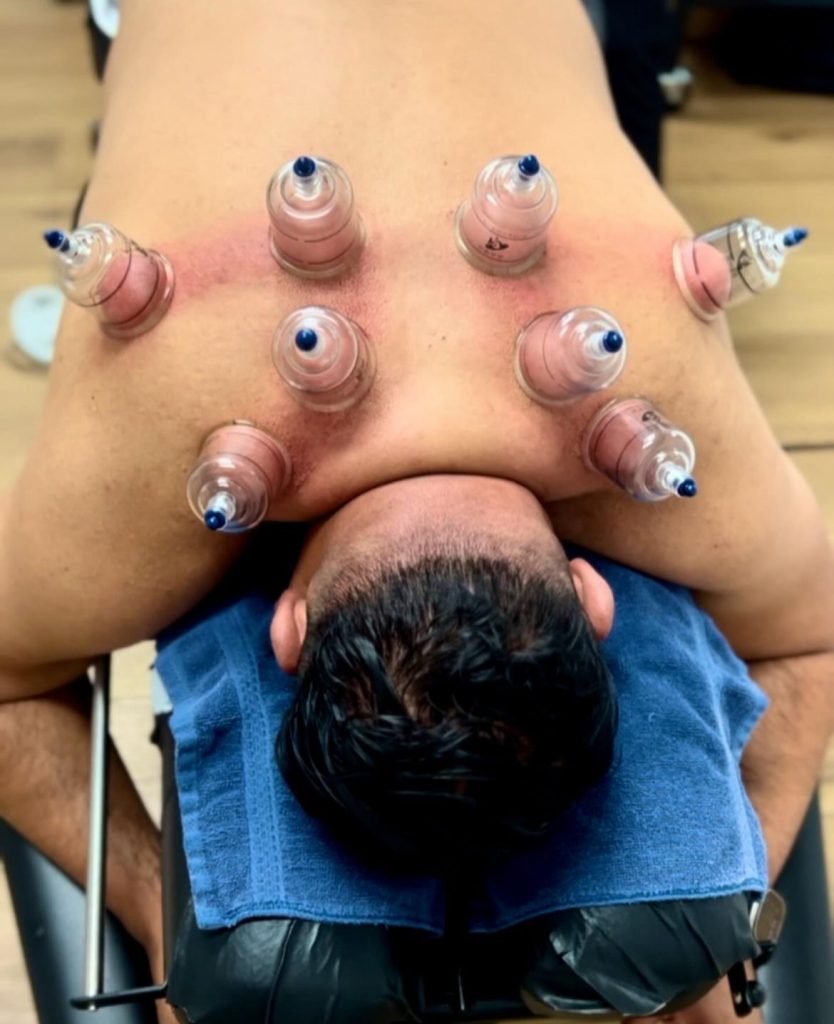
To increase the flexibility of the muscles and joints and ensure a full range of motion, there are muscular adhesions and trigger points that must be removed. Soft tissue treatments like Cupping, Scraping, Trigger point therapy, Dry needling, Muscle release Technique are some of the options that can help. But most importantly after manual treatment and to help combat the imbalances, there should be a regime of specific strengthening and stretching exercises to prevent future injury and to restore strength and function through corrective exercises, stretching and improving posture.
Thank you for considering Connected Movement as your partner on your journey to enhanced well-being. We look forward to hearing from you and helping you achieve your goals.